Articares: A Pioneer in Neurocognitive Training
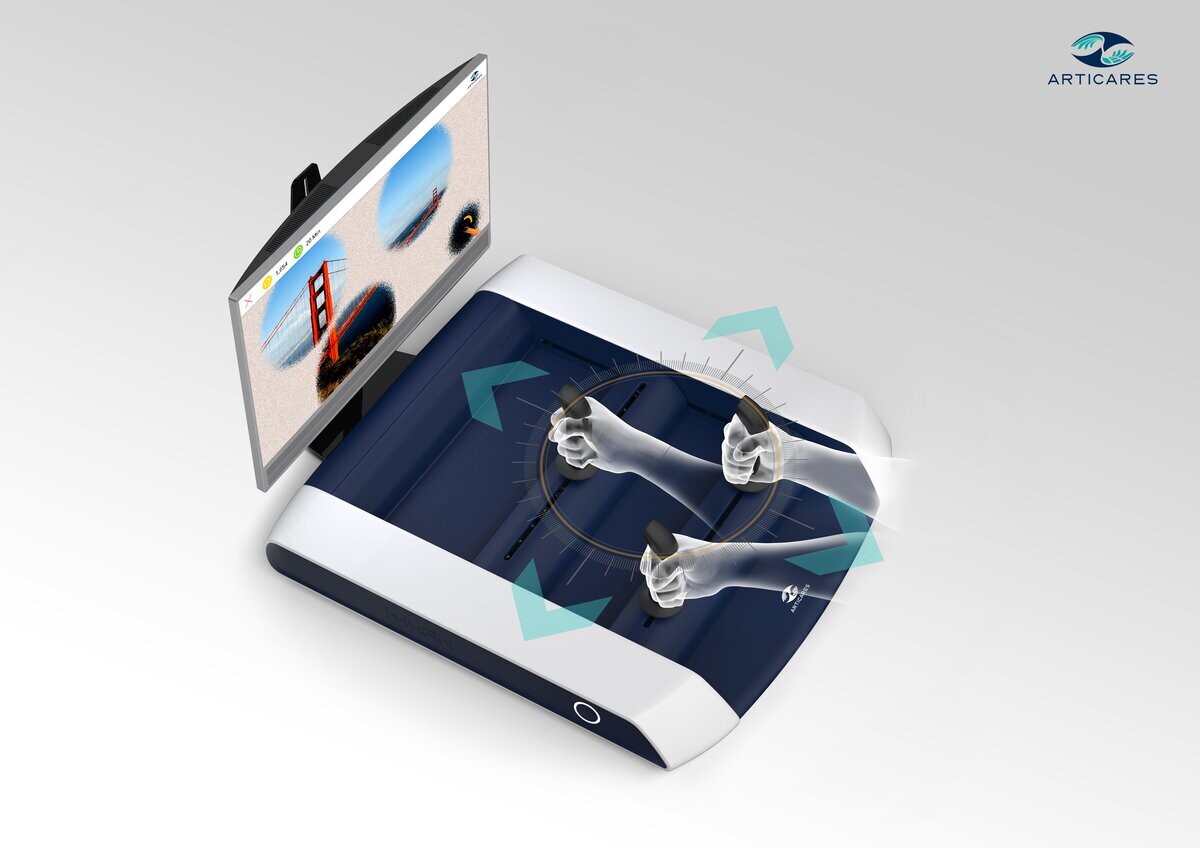
SINGAPORE – Articares has spent more than a decade pioneering neurocognitive training: therapy where patients don't just move through an exercise, but perceive a task, decide how to tackle it, and act on that judgement, all within a single game-like activity on the platform. That combination of sensing, thinking and moving is now delivering outstanding recovery outcomes for patients while easing the workload on clinical teams.
In a randomised controlled trial published in the Journal of NeuroEngineering and Rehabilitation, patients following an Articares-style neurocognitive robotic protocol achieved excellent recovery results over four weeks of daily sessions, with high-quality therapy delivered by the platform and none of the manpower strain that comes with one-to-one, therapist-led care (Ranzani et al., 2020). An earlier study in IEEE Transactions on Haptics found patients across a broad range of neurological conditions took to the same approach readily, with strong acceptance regardless of their starting ability (Metzger et al., 2014).
The results are why Articares built its entire platform philosophy around three capabilities: rendering real object properties like stiffness and grip so training translates to everyday life, continuously measuring force and position so every session produces an objective record without a staff member scoring it by hand, and adapting difficulty automatically so each patient stays at the edge of their own ability.
The payoff shows up directly in staffing. Independent validation of Articares-style deployments in eldercare settings has found therapist workload reduced by around 65 per cent while clinical outcomes are maintained, with a single staff member able to run a group session for up to eight clients on one platform.
"Neurocognitive training is what happens when you stop treating the arm and start treating the person operating it," said Asif Hussain, Ph.D, CEO of Articares. "Every platform we build, from H-Man to ReHandyBot, is designed around that same loop of sensing, deciding and moving, because that is what the evidence tells us gets people back to living their lives."
Articares' neurocognitive training approach is now running in hospitals, rehabilitation centres and home-based programmes across more than eight countries, built on research partnerships with institutions including Nanyang Technological University and ETH Zurich.